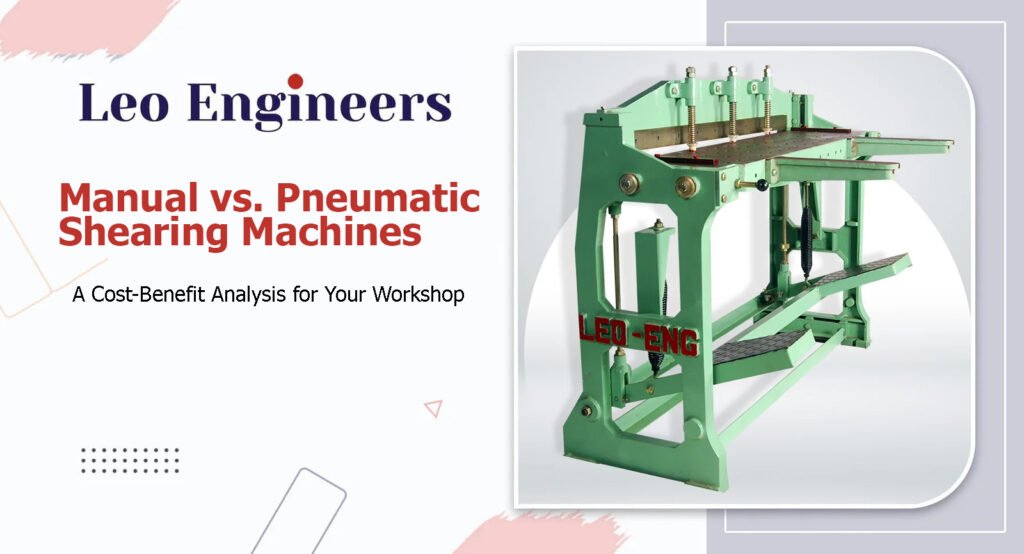
In the metal fabrication industry, the choice of equipment defines your production speed and profit margins. If you are running a growing workshop, you’ve likely reached the “efficiency wall” where your
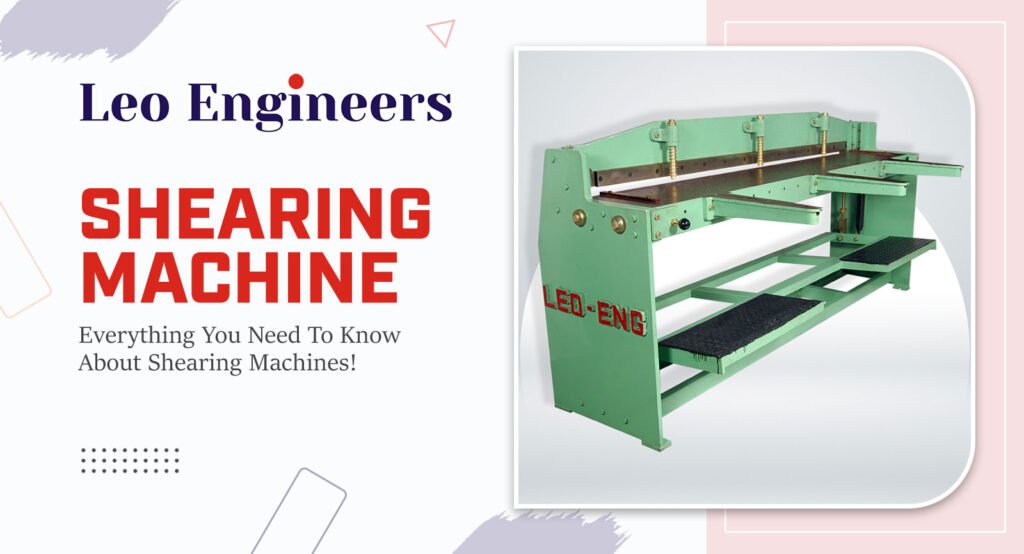
Foot Operated Shearing Machine is no longer fast enough to keep up with orders.
Should you upgrade to a
Pneumatic Shearing Machine? This guide breaks down the differences in performance, precision, and long-term value.
1. Throughput and Production Speed
- Manual (Foot/Treadle): These machines are powered by the operator’s leg strength. While great for occasional, light-gauge work, they are limited by operator fatigue. You cannot maintain a high pace for an 8-hour shift.
- Pneumatic: These machines use compressed air to drive the cutting stroke. This allows for rapid, repetitive cutting with zero physical strain on the operator. If your shop is doing high-volume batch cutting, a pneumatic shear can increase your output significantly.
2. Cutting Precision and Edge Quality
Precision depends on the consistency of the cutting force.
- Manual: It is difficult for an operator to apply the exact same pressure on every stroke. This can lead to bowing or inconsistent gaps, resulting in burrs that require secondary grinding.
- Pneumatic: The air cylinder delivers a consistent force every time. This results in cleaner edges, reduced material waste, and less time spent on finishing work.
3. Material Capacity
- Foot Operated: Generally limited to thinner sheets (typically up to 2mm or 3mm depending on the material). Attempting to cut thicker or harder metals, such as stainless steel, on a manual machine is not only difficult but can also damage the Shear Blades.
- Pneumatic: These machines are designed for heavier duty cycles and thicker gauges. They are better suited for workshops that handle a variety of materials, including CRGO steel or thicker mild steel.
4. Comparison Summary Table
| Feature |
Foot Operated Shear |
Pneumatic Shear |
| Power Source |
Human Force |
Compressed Air |
| Best For |
Light, Occasional Use |
High-Volume Production |
| Operator Fatigue |
High |
Low |
| Cutting Accuracy |
Moderate |
High |
| Maintenance |
Simple (Lubrication) |
Moderate (Air Filters & Seals) |
Which One Should You Choose?
Choose a Foot Operated Shearing Machine if:
- You have a small workshop with limited space.
- You do not have a reliable compressed air supply.
- You only perform light-gauge cutting as a secondary task.
Choose a Pneumatic Shearing Machine if:
- You are tired of operator fatigue slowing down your production line.
- You need high-accuracy, burr-free cuts for professional clients.
- You want to reduce the cost of secondary grinding and finishing.
Upgrade Your Cutting Capacity Today
At
Leo Engineers, we manufacture robust shearing solutions tailored to Indian workshop conditions. Whether you need the simplicity of a
Treadle Shearing Machine or the power of a
Pneumatic Shearing Machine, we ensure high-grade materials, precision alignment, and reliable performance.