Polycarbonate sheets are widely used in industrial machine guards, electrical enclosures, transparent protective panels and equipment viewing windows.
Their combination of transparency, impact resistance and mechanical strength makes them suitable for many demanding industrial applications.
However, cutting polycarbonate sheets requires careful process control.
An unsuitable cutting method can produce rough edges, stress whitening, surface scratches or localized deformation. In some circumstances, excessive cutting stress may also contribute to cracking during subsequent fabrication or service.
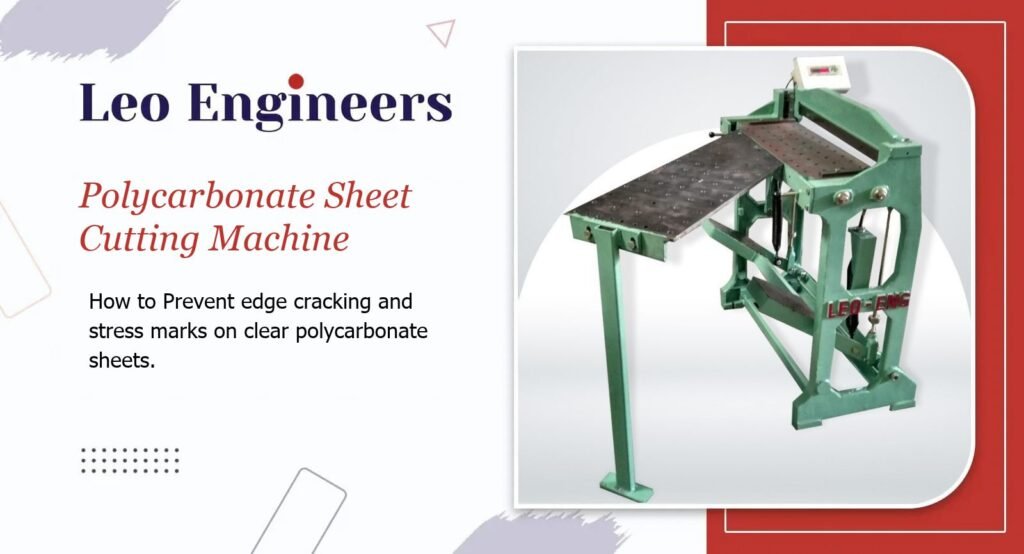
Choosing an appropriate Polycarbonate Sheet Cutting Machine is therefore important for manufacturers seeking consistent dimensions and reliable finished components.
This guide explains the common causes of cutting defects and explores how material support, cutting-tool geometry and suitable equipment can help improve polycarbonate sheet-cutting quality.
1. Understanding Polycarbonate Cutting Challenges
2. Common Problems During Polycarbonate Sheet Cutting
Edge Melting and Material Buildup
Rotating cutting tools can generate frictional heat.
When cutting conditions are unsuitable, excessive heat may soften the thermoplastic near the cutting zone.
This can produce rough edges or material buildup.
Appropriate tooling, feed rates and cutting conditions help control these problems.
Stress Whitening
Stress whitening appears as a visible change in the material near an area subjected to mechanical deformation.
During cutting, excessive pressure or unsuitable tooling can introduce localized stress.
This may produce an undesirable appearance, particularly in transparent components.
Edge Chipping and Cracking
Although polycarbonate is highly impact-resistant, unsuitable cutting conditions can still damage its edges.
Existing material stress, sheet thickness and cutting-tool condition can influence the risk.
Acrylic sheets require particular attention because their more brittle behavior makes them susceptible to cracking under certain mechanical cutting conditions.
Surface Scratching
Transparent sheets can be damaged during positioning, clamping and handling.
Scratches may affect appearance and lead to additional finishing work or material rejection.
Suitable support surfaces and careful handling help reduce this risk.
3. Polycarbonate vs Acrylic: Why Material Selection Matters
Polycarbonate and acrylic are both transparent thermoplastics, but their mechanical properties differ.
| Property | Polycarbonate | Acrylic (PMMA) |
|---|---|---|
| Impact resistance | Generally high | Lower than polycarbonate |
| Mechanical behavior | Relatively ductile | More brittle |
| Cutting considerations | May tolerate selected mechanical cutting methods | Greater attention required to prevent cracking |
| Common applications | Machine guards and protective panels | Displays, signage and transparent components |
4. Can Mechanical Shearing Produce Clean Polycarbonate Edges?
Mechanical shearing separates material through cutting forces rather than removing material with a rotating tool.
For certain thin polycarbonate sheets, an appropriately configured cutting system may provide an efficient straight-cutting solution.
However, successful mechanical cutting depends on several factors:
- Material grade
- Sheet thickness
- Cutting-edge geometry
- Blade clearance
- Material support
- Cutting speed
- Required edge quality
Mechanical shearing should only be used when the material and machine manufacturer confirm that the process is suitable.
Manufacturers should conduct appropriate cutting trials before introducing the method into regular production.
5. Why Cutting-Tool Geometry Matters
Cutting-tool geometry influences how forces are transferred into the sheet.
Unsuitable blade geometry can create excessive localized deformation or produce an unacceptable edge finish.
For polycarbonate processing, tooling should be selected according to the material characteristics and cutting-machine design.
Important considerations include cutting-edge condition, blade geometry, clearance and the required cutting force.
Tooling designed for conventional metal shearing should not automatically be used for transparent thermoplastic materials.
6. Preventing Surface Damage Through Proper Sheet Support
Transparent polycarbonate sheets require careful handling throughout the cutting process.
Poorly supported material can move, bend or become scratched during positioning.
Appropriate material support helps maintain stable positioning and reduces unnecessary handling.
Where suitable for the machine and material, protective contact surfaces may help prevent scratches during clamping.
However, clamping pressure must remain appropriate for the cutting process.
Excessive pressure can introduce unwanted deformation, while insufficient pressure may allow the sheet to move.
7. Pneumatic Cutting Equipment for Plastic Fabrication
Pneumatic cutting systems use compressed air to operate the cutting mechanism.
Depending on their design, they may offer repeatable actuation and convenient operator controls.
These characteristics can be useful for repetitive industrial cutting applications.
However, pneumatic operation does not automatically guarantee a clean polycarbonate edge.
The complete cutting system must be suitable for the material, including its blade geometry, support arrangement and operating parameters.
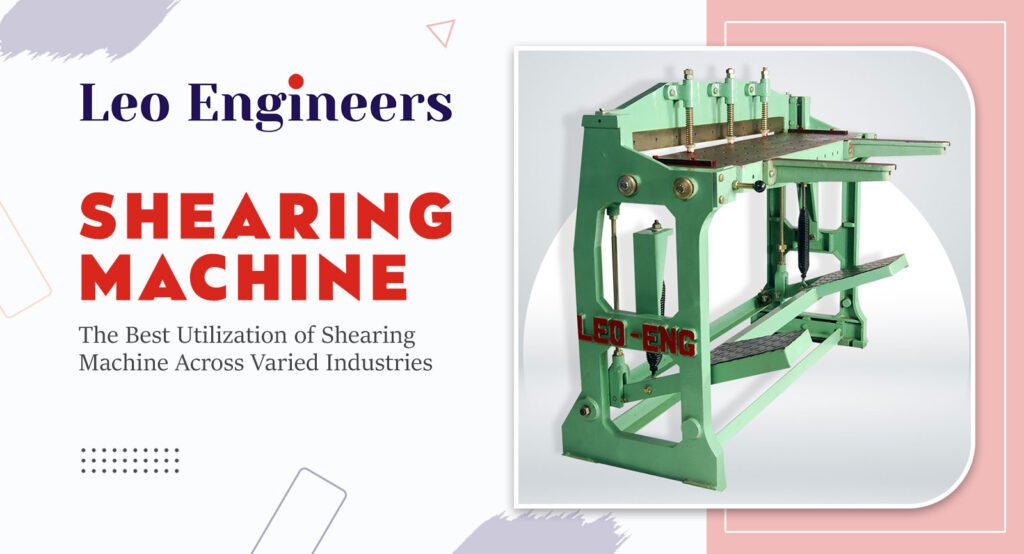
For more information about industrial air-powered cutting equipment, explore Leo Engineers’ Pneumatic Shearing Machine product range.
8. Foot-Operated Cutting Equipment for Small Workshops
Foot-operated cutting machines provide mechanical actuation through a pedal mechanism.
They may be useful for certain workshop applications where operators need to position material before initiating a cutting cycle.
However, the suitability of a foot-operated machine for polycarbonate depends on its actual construction and tooling configuration.
Before selecting equipment, manufacturers should confirm the supported material types, thickness range and required edge-quality specifications.
Explore Leo Engineers’ Foot Operated Shearing Machine to review the available equipment and discuss application compatibility.
9. Reducing Cutting Stress and Edge Damage
Preventing excessive cutting stress requires attention to the entire fabrication process.
Manufacturers should evaluate material condition, tool suitability, cutting parameters and finished-part handling.
A practical production approach includes:
- Confirming the correct polycarbonate grade and thickness.
- Selecting an approved cutting method.
- Checking cutting-tool condition.
- Providing appropriate material support.
- Following validated machine settings.
- Inspecting the first finished component.
- Monitoring edge quality during production.
Where cracking or stress whitening occurs repeatedly, production teams should investigate the cutting conditions before continuing with a large batch.
10. Why Cutting-Edge Maintenance Matters
Cutting-tool condition can influence the quality and consistency of finished components.
As cutting edges wear, the material may experience changes in cutting force and deformation.
These changes can contribute to unacceptable edge quality.
Maintenance requirements depend on the cutting equipment, tooling material and processing conditions.
For general industrial blade-care principles, read Leo Engineers’ Shear Blade Maintenance Guide.
For polycarbonate applications, always follow the maintenance recommendations provided for the specific cutting equipment.
11. Inspecting Finished Polycarbonate Components
Inspection is important when manufacturing transparent protective panels and other components where appearance and mechanical performance matter.
| Inspection Parameter | What to Examine |
|---|---|
| Edge quality | Roughness, chipping or visible deformation |
| Stress whitening | Visible discoloration near the cutting edge |
| Dimensions | Length and width against specified tolerances |
| Surface condition | Scratches and handling damage |
| Flatness | Unexpected bending or distortion |
| Material integrity | Visible cracking or other defects |
12. Selecting a Polycarbonate Sheet Cutting Machine
Before selecting cutting equipment, manufacturers should define their processing requirements.
Important considerations include:
- Polycarbonate grade
- Sheet thickness
- Maximum cutting dimensions
- Required edge finish
- Dimensional tolerance
- Production volume
- Material-handling requirements
- Inspection procedures
For applications involving machine guards or other protective components, equipment selection should also account for the finished product’s safety requirements.
A cutting process should be approved based on actual material compatibility and verified production results.
Conclusion
Achieving consistent polycarbonate sheet-cutting quality requires careful control of cutting forces, tooling, material support and handling.
Although mechanical shearing may be suitable for selected thin polycarbonate applications, it should not be assumed appropriate for every sheet grade or thickness.
Manufacturers should evaluate the complete cutting process and verify that the resulting components meet their dimensional, appearance and performance requirements.
Leo Engineers offers industrial cutting equipment for manufacturing applications.
Contact Leo Engineers to discuss your Polycarbonate Sheet Cutting Machine requirements and confirm whether an available equipment configuration is suitable for your intended material and production needs.