In industrial fabrication, the most productive day is a safe day. While it’s tempting to start production the moment you walk into the workshop, taking just ten minutes to conduct a pre-shift safety inspection can be the difference between a smooth workflow and a dangerous, costly breakdown.
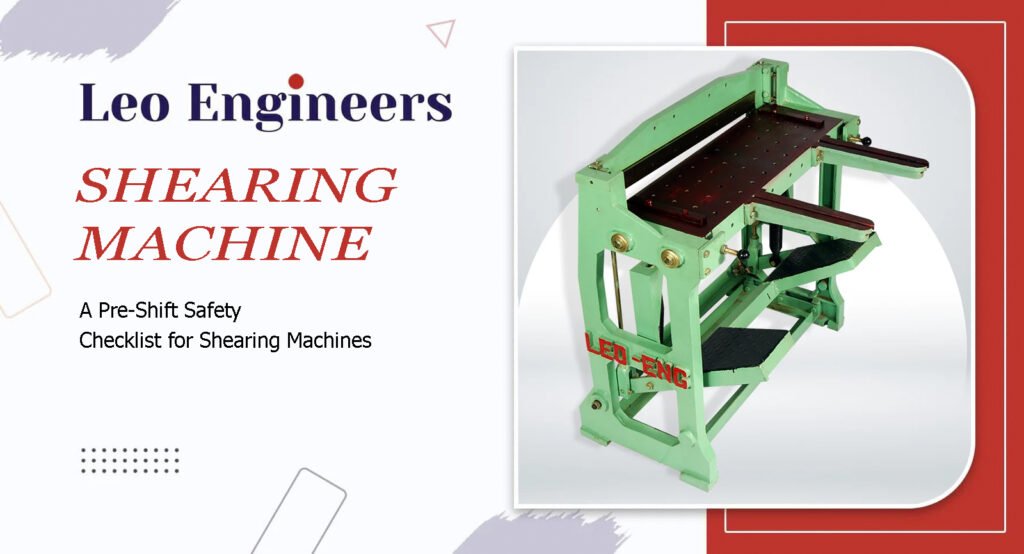
Whether you operate a Pneumatic Shearing Machine or a heavy-duty hydraulic press, use this 10-point checklist to ensure your equipment and team are ready to go.
The 10-Point Pre-Shift Inspection
- Operator Readiness: Confirm the operator is trained, authorized, and fit for duty. Ensure all required Personal Protective Equipment (PPE), such as safety glasses, gloves, and steel-toed shoes, is worn and in good condition.
- Clear the Work Zone: Remove slip and trip hazards like loose parts, packaging, or spilled fluids from the surrounding area.
- Inspect Machine Guards: Verify that all fixed and movable guards are present, properly mounted, and undamaged. Ensure they move freely without obstruction.
- Test Safety Interlocks: Before startup, test light curtains, safety mats, or interlock switches to ensure the machine cannot run if a guard is open or the safety zone is breached.
- Verify Emergency Stops (E-Stops): Press every E-stop button or foot pedal to confirm the machine halts immediately and cannot restart until the device is reset.
- Check Fluids and Pneumatics: Look for damaged cables or frayed hoses that could burst under load. Confirm hydraulic and lubrication levels are within specifications and that there are no visible leaks.
- Examine Tooling and Blades: Inspect your Shear Blades and clamps for cracks, abnormal wear, or misalignment. Ensure no temporary fixes, such as tape or wire, are holding critical parts together.
- Run a Dry Test: Before production, start the machine in manual or jog mode to watch for unusual noises, vibrations, or delays.
- Review Shift Logs: Check for notes from the previous shift regarding recurring faults, odd noises, or open maintenance issues.
- Confirm Material Compatibility: Ensure the material dimensions and thickness are compatible with your machine’s capacity to avoid overloading the system.