Electrical insulation materials play an essential role in transformer manufacturing, motor winding and high-voltage equipment production.
Among these materials, electrical pressboard and presspahn are widely used to manufacture insulating barriers, spacers and other components that provide mechanical support and electrical separation.
However, cutting dense cellulose-based insulation materials requires careful attention.
An unsuitable cutting method can crush fibers, produce rough edges or create dimensional inconsistencies. These defects can increase material waste and complicate subsequent insulation assembly.
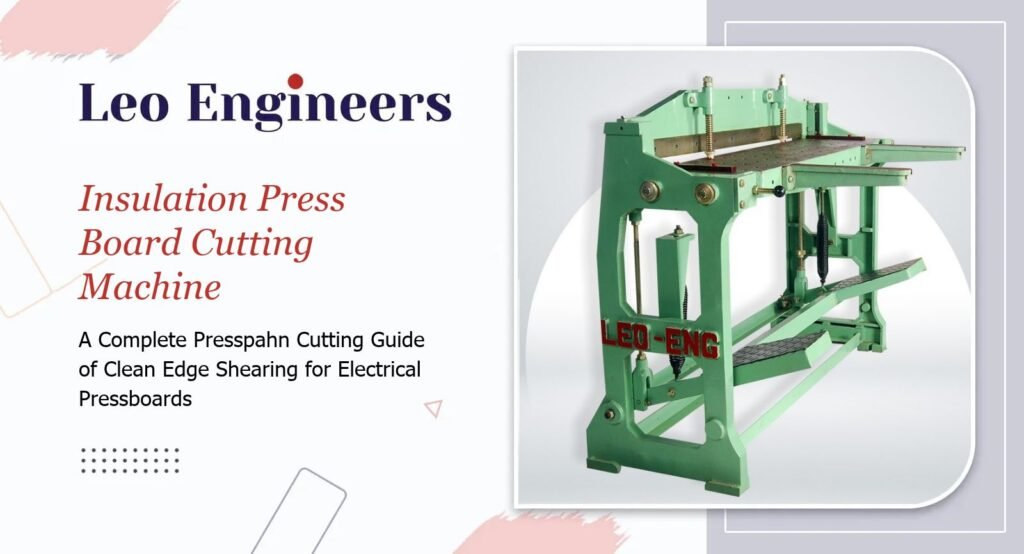
A properly configured Insulation Press Board Cutting Machine helps manufacturers produce accurately sized components while controlling edge damage.
This guide explains the challenges of cutting electrical pressboard, the factors influencing cut-edge quality and the considerations involved in selecting suitable cutting equipment.
1. Understanding Electrical Pressboard and Presspahn
Electrical pressboard is a cellulose-based insulating material manufactured for electrical equipment applications.
Different grades are available with varying thicknesses, densities, mechanical characteristics and electrical properties.
Presspahn generally refers to a family of dense electrical insulating papers or boards. The terminology and specifications can vary between manufacturers.
These materials are commonly used in applications such as:
- Transformer insulation barriers
- Winding spacers
- Electrical insulation strips
- Insulating components
- Motor and electrical equipment manufacturing
Because these components must fit accurately within electrical assemblies, dimensional consistency is important.
The cutting method should also minimize loose fibers and avoid unnecessary damage to the material.
2. Why Electrical Pressboard Requires Specialized Cutting
3. Common Problems During Pressboard Cutting
Fiber Fraying
Fiber fraying occurs when cellulose fibers are pulled or torn rather than cleanly separated.
This can produce rough edges and loose material around the cutting line.
Possible contributing factors include unsuitable blade geometry, cutting-edge wear and inadequate material support.
Edge Crushing
Excessive compression during cutting can deform the material near the cutting edge.
Instead of producing a clean separation, the cutting process may leave a visibly compressed or damaged region.
The severity depends on the pressboard grade, thickness and cutting arrangement.
Edge Separation
Certain layered insulation materials may experience separation near the cutting edge when subjected to unsuitable cutting conditions.
The risk depends on the material’s construction and manufacturing specifications.
Dimensional Variation
Inconsistent positioning or material movement can produce variations in the width or length of finished insulation components.
This becomes particularly important when manufacturing repetitive components such as winding spacers.
4. Why Clean Cutting Matters in Transformer Manufacturing
5. Important Features of an Insulation Press Board Cutting Machine
Selecting suitable cutting equipment requires evaluating the material and the finished component’s requirements.
Several machine characteristics can influence the cutting process.
Stable Material Clamping
A suitable hold-down arrangement helps prevent unwanted movement during cutting.
The clamping system must secure the material without applying excessive pressure that could damage its surface.
Appropriate Cutting Geometry
Blade geometry influences the way cutting forces are transferred into the pressboard.
A cutting arrangement suited to the material can help control fiber tearing and edge compression.
Accurate Material Positioning
Consistent positioning is important when producing insulation strips and other repetitive components.
Appropriate measuring and positioning arrangements can help operators maintain the required dimensions.
Suitable Cutting Blades
Blade selection should reflect the material grade, thickness, cutting mechanism and production requirements.
The correct blade material and geometry should be confirmed with the equipment manufacturer.
For a broader explanation of industrial cutting-blade options, read Leo Engineers’ Guide to Shear Blade Materials.
6. Pneumatic and Foot-Operated Cutting Equipment
Different operating systems may be suitable for different insulation-cutting applications.
However, the machine must be specifically configured and approved for the pressboard material being processed.
| Consideration | Pneumatic Cutting System | Foot-Operated Cutting System |
|---|---|---|
| Actuation | Compressed air | Manual foot operation |
| Production approach | Potentially suitable for repetitive cutting | Potentially suitable for smaller production batches |
| Infrastructure | Requires a suitable compressed-air supply | Does not require compressed air |
| Operator control | Depends on machine controls | Depends on mechanical arrangement |
| Material suitability | Must be verified for the pressboard grade | Must be verified for the pressboard grade |
The operating mechanism alone does not determine the quality of the finished cut.
Blade geometry, machine construction, clamping and material support are equally important.
For workshops evaluating manually operated equipment, explore Leo Engineers’ Foot Operated Shearing Machine and confirm whether the available configuration is suitable for the intended insulation material.
7. Maintaining Consistent Cutting Quality
Consistent production requires more than selecting the correct machine.
Manufacturers should establish appropriate operating and inspection procedures for each insulation material.
Important considerations include:
- Material identification
- Thickness verification
- Cutting-tool condition
- Approved machine settings
- Material positioning
- Finished-edge inspection
- Dimensional inspection
Production teams should also follow the material supplier’s recommendations for handling and storage.
Where moisture content affects the material’s processing characteristics, appropriate environmental controls may be necessary.
8. The Importance of Cutting-Edge Maintenance
Cutting-edge condition influences the quality and repeatability of the cutting process.
As cutting tools wear, operators may notice increasing fiber fraying, irregular edges or additional cutting resistance.
These changes should trigger inspection according to the machine manufacturer’s recommendations.
However, maintenance requirements depend on the blade material, cutting mechanism and pressboard grade.
For general industrial blade-care principles, refer to Leo Engineers’ Shear Blade Maintenance Guide.
The specific sharpening and maintenance procedures for pressboard-cutting equipment should always follow the relevant equipment documentation.
9. Quality Inspection for Finished Pressboard Components
Inspection helps identify defects before insulation components enter transformer assembly.
A practical quality-control procedure can examine several characteristics.
| Inspection Area | What to Check |
|---|---|
| Edge quality | Excessive fraying or visible crushing |
| Dimensions | Length and width against specified tolerances |
| Surface condition | Scratches, indentation or other visible damage |
| Material integrity | Unwanted separation or cracking |
| Cleanliness | Loose fibers and other visible contamination |
Acceptance criteria should be established according to the material specification and the finished component’s intended application.
10. Selecting Equipment for Electrical Insulation Production
Before choosing an insulation press board cutting machine, manufacturers should identify their actual production requirements.
Important questions include:
- Which electrical insulation materials will be processed?
- What material thicknesses are required?
- What are the maximum cutting dimensions?
- What dimensional tolerances must be maintained?
- What production volume is expected?
- What edge-quality requirements apply?
- What material-handling arrangements are necessary?
Sharing these requirements with the equipment supplier helps determine whether an available machine is appropriate or whether a specialized configuration is needed.
Conclusion
Clean and consistent electrical pressboard cutting supports the manufacture of accurately sized insulation components for transformers and other electrical equipment.
Controlling fiber fraying, edge crushing, material movement and dimensional variation can help manufacturers reduce unnecessary finishing work and maintain consistent production quality.
The most suitable Insulation Press Board Cutting Machine depends on the material grade, thickness, production requirements and specified edge-quality tolerances.
Leo Engineers offers industrial cutting equipment. Manufacturers can contact the team to discuss their insulation-cutting requirements and confirm whether an appropriate machine configuration is available.