
Architectural sheet metal fabrication requires accurate cutting, careful material handling and consistent edge quality.
Roofing contractors and fabrication workshops regularly process prepainted steel, coated aluminum and other thin sheet materials to manufacture drip edges, ridge caps, gutters and wall flashings.
These components must meet dimensional requirements while maintaining the appearance and protective properties of their coated surfaces.
However, unsuitable cutting methods can introduce scratches, edge distortion, excessive burrs or localized coating damage.
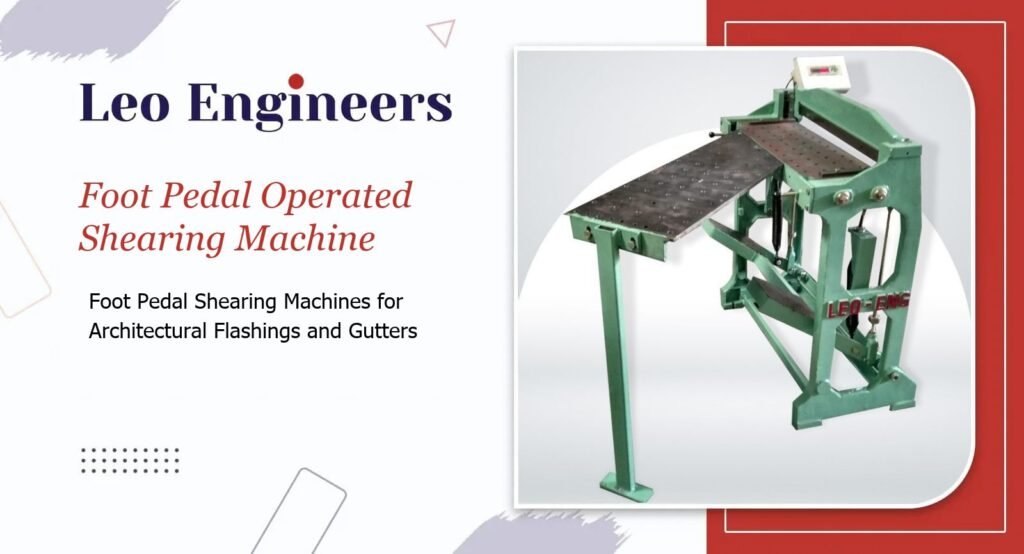
A suitable Foot Pedal Shearing Machine can provide a practical cutting solution for compatible light-gauge sheet materials, particularly in workshops that require controlled straight cutting without powered actuation.
This guide explores the challenges of cutting architectural sheet metal and explains how appropriate equipment, material support and cutting practices help improve fabrication quality.
1. Understanding Architectural Sheet Metal Materials
Architectural flashing and gutter manufacturers work with several sheet metal materials.
Each material has different mechanical characteristics and surface-protection requirements.
Prepainted Galvanized Steel
Prepainted galvanized steel combines a zinc-coated steel substrate with an organic coating system.
It is commonly used in roofing and architectural sheet metal applications.
During cutting, manufacturers must consider the sheet thickness, coating system and required edge quality.
Prepainted Aluminum-Zinc Coated Steel
Prepainted aluminum-zinc coated steel is another material used in roofing and cladding applications.
Its protective coating system helps provide corrosion resistance under suitable service conditions.
Cutting practices should minimize unnecessary damage to the protective layers.
Architectural Aluminum
Aluminum sheets are used for flashing, cladding and other architectural components.
Their mechanical properties and surface finishes differ from those of coated steel.
Manufacturers should select cutting parameters appropriate for the specific aluminum grade and thickness.
2. Common Problems During Roofing Sheet Cutting
Thin architectural sheets can develop several defects during unsuitable cutting or handling.
Surface Scratching
Prepainted materials are vulnerable to visible surface damage.
Scratches may occur when sheets move across contaminated support surfaces or come into contact with unsuitable clamping arrangements.
Keeping contact surfaces clean and using appropriate material-handling practices helps reduce this risk.
Edge Distortion
Thin sheets can bend or deform near the cutting line.
The severity depends on material properties, blade geometry, clearance and sheet support.
Excessive edge distortion can create difficulties during subsequent bending and installation.
Coating Damage
Mechanical cutting may damage protective coatings near the cut edge.
The extent of damage depends on the material, coating system and cutting conditions.
Manufacturers should follow the coated-sheet supplier’s fabrication recommendations, particularly where exposed cut edges require additional corrosion protection.
Excessive Burr Formation
Unsuitable cutting conditions can produce raised metal projections along the cut edge.
Burrs can interfere with handling, bending and assembly.
Controlling the cutting process helps maintain acceptable edge quality.
3. Why Long Flashing Blanks Require Proper Support
Architectural flashing components are frequently manufactured from relatively long sheet metal blanks.
When a large portion of the sheet extends beyond the machine’s working area, inadequate support can allow the material to sag or move.
This movement may affect cutting consistency and increase the risk of surface damage.
Suitable support arrangements help operators position the sheet and maintain stable material handling.
Depending on the machine configuration, front or rear support systems may be appropriate.
The support arrangement should reflect the sheet dimensions, material weight and production requirements.
4. Foot Pedal Shearing for Architectural Fabrication
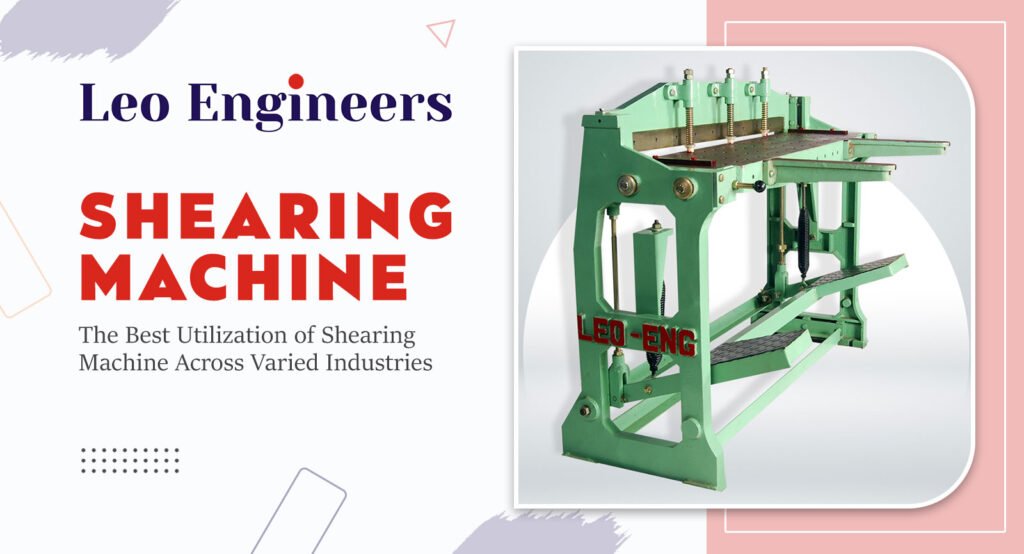
Foot-operated shearing machines use a mechanical pedal arrangement to actuate the cutting mechanism.
For suitable applications, this operating method can provide several practical advantages.
Manual Cutting Control
The operator initiates the cutting stroke through the foot pedal.
This arrangement can be useful in workshops where material positioning and controlled operation are important.
However, safe operating procedures and machine guarding remain essential.
No Powered Actuation
A purely mechanical foot-operated machine does not require electricity or compressed air for its cutting stroke.
This may be useful in workshops or temporary fabrication environments where powered equipment is inconvenient.
The machine’s size, weight and installation requirements still need to be considered.
Suitable for Selected Light-Gauge Materials
Depending on its rated capacity and tooling, a foot-operated shear may be suitable for certain light-gauge architectural sheet metals.
Manufacturers should confirm the machine’s supported materials, thickness range and cutting length before selecting equipment.
For detailed product information, explore Leo Engineers’ Foot Operated Shearing Machine.
5. Protecting Coated Sheets During Cutting
Maintaining the appearance and protective properties of coated architectural sheets requires careful handling.
Manufacturers should consider the complete cutting process rather than focusing exclusively on the cutting blade.
Important practices include:
- Keeping machine contact surfaces clean
- Using suitable material support
- Avoiding unnecessary sheet movement
- Following approved cutting settings
- Inspecting cut edges
- Handling finished blanks carefully
Where protective films are supplied with the material, follow the sheet manufacturer’s instructions regarding their use and removal.
6. The Importance of Blade Clearance
Blade clearance influences how sheet metal deforms and fractures during cutting.
If clearance is unsuitable, the finished edge may develop excessive burrs or unwanted deformation.
For architectural sheet metal, clearance should be established according to the material grade, thickness, blade geometry and machine specifications.
A setting suitable for one sheet material may not produce equivalent results with another.
Manufacturers should follow the equipment supplier’s recommendations and inspect the finished edge when changing material specifications.
7. Cutting-Edge Condition and Coated Sheet Quality
Cutting-edge condition is another factor influencing the quality of finished architectural components.
As blades wear, cutting performance may change.
This can contribute to irregular edges, excessive deformation or increased burr formation.
Regular inspection helps manufacturers identify changes in cutting performance.
For detailed information about general industrial blade-care practices, read Leo Engineers’ Shear Blade Maintenance Guide.
Maintenance procedures should always follow the requirements of the specific machine and blade system.
8. Foot-Operated vs Pneumatic Shearing for Roofing Workshops
Different workshops have different production requirements.
The appropriate operating method depends on material specifications, cutting dimensions and expected production volume.
| Consideration | Foot-Operated Shearing | Pneumatic Shearing |
|---|---|---|
| Actuation | Mechanical foot pedal | Compressed-air system |
| Infrastructure | No powered cutting system required | Requires suitable compressed-air supply |
| Production approach | May suit selected small-batch applications | May suit repetitive production |
| Operator control | Mechanical pedal operation | Depends on machine controls |
| Material suitability | Determined by machine specifications | Determined by machine specifications |
Neither operating method automatically guarantees better cut-edge quality.
Blade geometry, machine construction, clearance and material support must also be considered.
For workshops evaluating air-powered equipment, Leo Engineers also offers industrial pneumatic shearing solutions. Confirm the relevant machine specifications before selecting equipment for coated architectural sheets.
9. Improving Dimensional Consistency in Flashing Production
Architectural flashing manufacturers often produce repeated components that must fit consistently during installation.
Dimensional variation can create alignment problems and increase the need for adjustment on-site.
Appropriate material-positioning arrangements help maintain repeatable cutting dimensions.
Depending on the machine configuration, suitable measuring stops or back gauges may support repetitive production.
Manufacturers should also inspect the first finished blank before processing an entire batch.
This helps identify positioning or cutting problems early.
10. Quality Inspection for Finished Flashing Blanks
Inspection is important when manufacturing architectural sheet metal components.
A practical inspection procedure may include the following checks.| Inspection Area | What to Examine |
|---|---|
| Dimensions | Length and width against specified tolerances |
| Edge quality | Excessive burrs and irregularities |
| Surface condition | Scratches and visible coating damage |
| Flatness | Unexpected bending or distortion |
| Coating condition | Visible damage near the cut edge |
| Repeatability | Consistency across production batches |
11. Selecting a Foot Pedal Shearing Machine for Roofing Applications
Before purchasing cutting equipment, architectural sheet metal fabricators should identify their actual production requirements.
Important considerations include:
- Sheet material and coating type
- Material thickness
- Maximum cutting length
- Required dimensional tolerances
- Expected production volume
- Material-support requirements
- Available workshop space
- Finished-edge quality requirements
These details help manufacturers determine whether a foot-operated machine is suitable for their fabrication workflow.
Conclusion
Architectural flashing and gutter fabrication requires accurate cutting and careful handling of thin, coated sheet materials.
Surface scratches, edge distortion, coating damage and dimensional variation can affect the appearance and installation of finished components.
For suitable light-gauge applications, a properly configured Foot Pedal Shearing Machine can provide a practical mechanical cutting solution without powered actuation.
However, the final cutting result depends on the complete process, including blade condition, material support, clearance and handling practices.
Leo Engineers offers industrial shearing equipment for manufacturing applications. Contact the team to discuss your roofing sheet-cutting requirements and confirm the suitability of available foot-operated and pneumatic shearing machines.





 Users Today : 25
 Users This Month : 468
 Total Users : 469
