In water supply, irrigation, gas distribution, industrial pipelines, and infrastructure projects, HDPE pipes are often joined directly at the installation site. The pipe itself may be capable of long service, but the quality of the finished pipeline also depends heavily on the fusion joint.
A weak butt fusion joint can lead to leakage, failed pressure testing, rework, and project delays.
When a joint does not look right, replacing the pipe immediately is not always the answer. The first step is to identify what happened during the fusion cycle.
Temperature, pipe alignment, facing, heating time, changeover time, joining pressure, and cooling conditions all influence the final joint.
This guide explains common HDPE butt fusion troubleshooting situations and what operators should check when joint quality changes during field installation.
1. What Makes an HDPE Butt Fusion Joint Fail?
Butt fusion joins two prepared HDPE pipe ends by heating their surfaces and bringing them together under controlled pressure.
A successful process depends on several stages working together:
- Pipe positioning
- Clamping
- Facing
- Heating
- Changeover
- Fusion
- Cooling
A problem in one stage can affect the final joint.
For example, perfect heating cannot compensate for pipe ends that are not properly aligned.
Similarly, correct alignment cannot compensate for an incorrect heating cycle.
That is why troubleshooting should examine the complete fusion sequence, rather than focusing only on temperature.
2. Common HDPE Butt Fusion Problems
Uneven Bead Formation
A normal fusion bead should develop consistently around the pipe circumference.
If one side produces a noticeably different bead from the other, investigate:
- Pipe alignment
- Clamping
- Facing quality
- Pressure consistency
- Pipe end condition
Misalignment can cause unequal contact between the two pipe faces.
Weak or Brittle Joint
A joint that appears weak can result from incorrect fusion conditions.
Potential causes include:
- Insufficient heating
- Excessive heating
- Incorrect changeover time
- Contamination
- Excessive movement during cooling
- Incorrect joining pressure
The exact cause should be determined from the machine parameters and the appearance of the completed joint.
Contaminated Fusion Surface
HDPE pipe ends need to remain clean after facing.
Dust, mud, moisture, grease or other contamination can interfere with the fusion process.
This is particularly important on construction sites where pipes may be installed around:
- Excavation areas
- Agricultural fields
- Road projects
- Drainage channels
- Muddy environments
The cleaner the prepared pipe faces remain before joining, the easier it is to maintain a controlled fusion process.
3. Temperature Variations During HDPE Fusion
Temperature is one of the most important variables in butt fusion.
The heating plate must provide a suitable and consistent surface temperature for the pipe material and approved fusion procedure.
A temperature that is too low can result in inadequate melting.
A temperature that is too high or applied incorrectly can damage the material around the fusion interface.
However, operators should not rely on a single temperature number for every pipe.
The correct parameters should come from the pipe manufacturer’s requirements, applicable fusion procedure, machine specifications, and relevant standards.
This is especially important because pipe diameter, wall thickness, resin characteristics, ambient conditions and equipment can influence the procedure.
4. Why Heating Time Matters
Heating is not simply about reaching a particular temperature.
The pipe faces must remain against the heating element for the required period so that an appropriate molten layer develops.
If heating is interrupted too early, the pipe faces may not be adequately prepared for fusion.
If the heating cycle is excessive, unnecessary thermal exposure can occur.
Operators should therefore follow the approved fusion procedure instead of estimating heating time by appearance alone.
5. The Importance of Changeover Time
The period between removing the heating plate and bringing the molten pipe ends together is known as the changeover time.
This is a critical part of the butt fusion cycle.
If the transition takes too long, the prepared surfaces can cool before they are joined.
This can affect the quality of the fusion interface.
For field installation, operators should organize the work area before heating begins so that the heating plate can be removed and the pipe ends brought together without unnecessary delay.
6. Cooling Under Pressure
The fusion joint does not become ready simply because the pipe ends have been joined.
The joint needs to remain stable during the specified cooling period.
Moving, rotating, lifting or disturbing the pipe before adequate cooling can introduce unwanted stress into the newly formed joint.
This is why the operator should maintain the required clamping and cooling conditions according to the approved procedure.
7. Why Pipe Alignment Matters
Alignment is particularly important when working with large-diameter HDPE pipes.
Before fusion, the pipe ends should be positioned correctly in the machine clamps.
Poor alignment can produce:
- Uneven bead formation
- Irregular contact
- Difficult fusion
- Increased mechanical stress
- Problems during subsequent pipeline installation
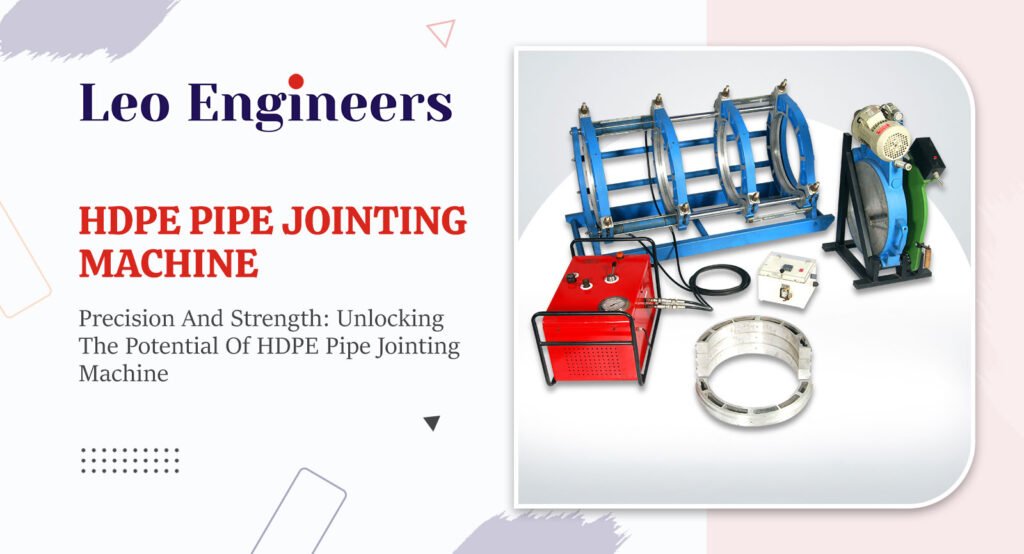
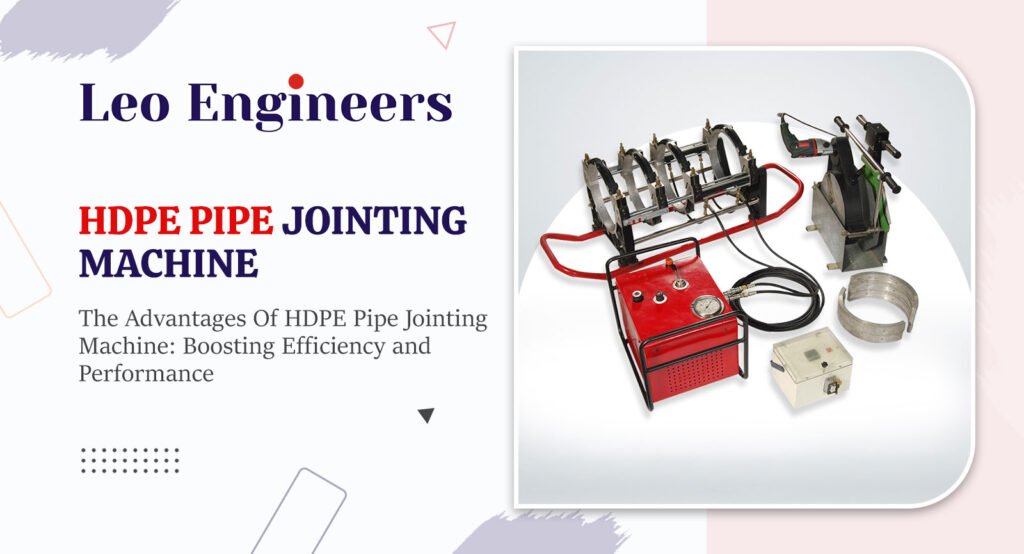
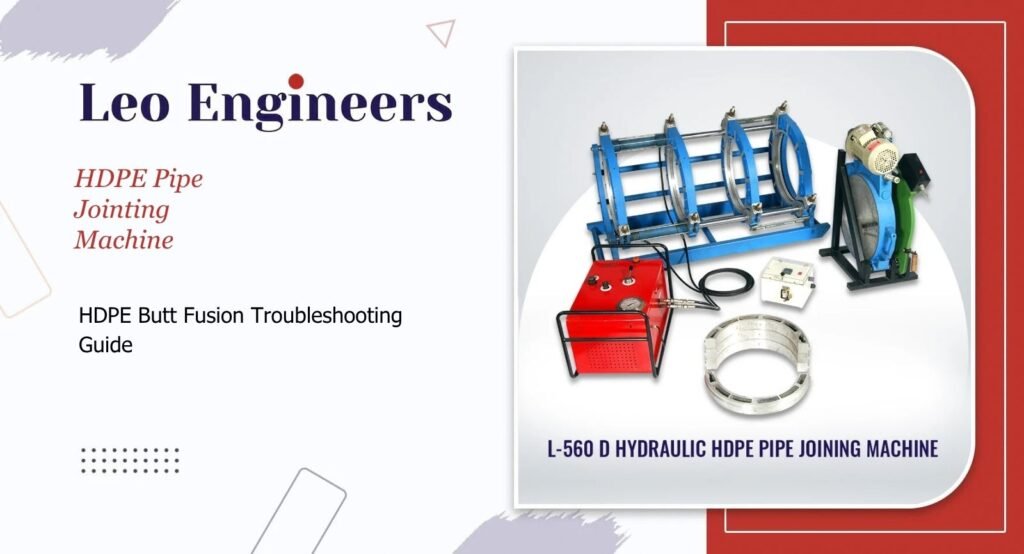
A rigid HDPE Pipe Jointing Machine helps maintain the position of the pipe ends during the fusion cycle.
8. Facing and Trimming Problems
Facing prepares the pipe ends for heating.
The objective is to create clean, properly aligned faces.
If the pipe ends are not adequately faced, the surfaces may not contact evenly.
Potential warning signs include:
- Visible gaps
- Uneven pipe-face contact
- Irregular bead development
- Excessive movement during positioning
After facing, the prepared surfaces should be protected from unnecessary contamination before heating.
9. Field Conditions Can Change the Fusion Process
Laboratory conditions and construction sites are very different.
On-site fusion may take place in:
- Open fields
- Trenches
- Roadsides
- Construction zones
- Irrigation projects
Industrial sites
Wind can cool exposed pipe ends and heating surfaces.
Dust can contaminate prepared surfaces.
Mud can interfere with equipment handling.
Cold ambient temperatures can also change how quickly the material and equipment lose heat.
This means field operators need to consider the environment rather than treating the fusion procedure as completely independent of site conditions.
10. Troubleshooting HDPE Fusion Problems
| Problem | Possible Cause | What to Check |
|---|---|---|
| Uneven bead | Misalignment or inconsistent pressure | Clamp alignment and pipe positioning |
| Weak joint | Incorrect heating or joining cycle | Fusion parameters and procedure |
| Contaminated joint | Dust, mud or moisture | Pipe-face cleanliness |
| Irregular pipe faces | Poor facing | Facing operation and cutter condition |
| Joint movement during cooling | Premature handling | Cooling procedure |
| Fusion temperature variation | Environmental or equipment factors | Heating plate and operating conditions |
| Excessive bead | Incorrect fusion conditions | Pressure and approved fusion parameters |
| Incomplete fusion | Insufficient heating/contact | Heating and joining sequence |
This table should be used as a troubleshooting guide, not as a substitute for the manufacturer’s fusion procedure or applicable joining standard.
11. How an HDPE Pipe Jointing Machine Helps
Manual handling becomes increasingly difficult as pipe diameter and wall thickness increase.
A properly designed HDPE pipe jointing machine provides controlled mechanical support for the fusion process.
Depending on the machine design, important features can include:
Strong Clamping
Clamps hold the pipe sections securely during facing, heating and fusion.
Controlled Alignment
The machine helps maintain the relative position of the two pipe sections.
Stable Heating
The heating plate can be positioned consistently between the prepared pipe ends.
Controlled Joining
The machine allows the operator to bring the pipe ends together in a controlled manner.
Cooling Stability
The pipe can remain clamped while the joint cools according to the required procedure.
These mechanical controls are especially useful in field applications where manual alignment can be difficult.
12. Temperature Monitoring Should Be Part of the Process
A common mistake is to treat heating temperature as a one-time check.
For consistent production, operators should monitor the heating system and verify that the equipment is operating within the required range.
If temperature behavior changes unexpectedly, investigate possible causes such as:
- Heating plate condition
- Power supply
- Environmental temperature
- Equipment calibration
- Heating element condition
- Incorrect operating procedure
If the machine shows abnormal temperature behavior, production should not simply continue based on visual inspection of the bead.
13. Don’t Diagnose the Joint by Bead Size Alone
The appearance of the fusion bead can provide useful information, but bead appearance should not be treated as the only quality criterion.
A visually attractive bead does not automatically prove that the joint has been produced according to the required procedure.
Operators should consider the complete fusion cycle, including:
- Preparation
- Alignment
- Heating
- Changeover
- Joining
- Cooling
- Equipment condition
Where project specifications require inspection or testing, the appropriate inspection and testing methods should also be followed.
14. A Practical On-Site Fusion Checklist
Before starting a fusion cycle, check:
☐ Correct pipe material and dimensions confirmed
☐ Pipe ends positioned correctly
☐ Clamps secure
☐ Pipe alignment checked
☐ Pipe ends properly faced
☐ Prepared surfaces protected from contamination
☐ Heating equipment operating correctly
☐ Required fusion parameters available
☐ Changeover process organized
☐ Joining pressure controlled
☐ Cooling period maintained
☐ Joint visually inspected
☐ Required project inspection completed
This simple checklist can help operators identify process problems before they become repeated defects.
15. What to Do When Several Joints Fail
If multiple joints from the same installation show similar problems, do not treat every joint as an isolated failure.
Look for a common process variable.
Check:
- Heating temperature
- Heating time
- Changeover time
- Alignment
- Facing
- Joining pressure
- Cooling
- Environmental
- conditions
- Machine condition
- Operator procedure
Repeated defects often point toward a repeatable process issue.
For example, if joints produced during a particular period all show similar irregularities, reviewing the fusion parameters and machine behavior during that period can be more useful than inspecting each joint independently.
16. Why Machine Rigidity Matters on Construction Sites
A pipe jointing machine may be used far away from a controlled factory environment.
The equipment may need to operate around:
- Uneven ground
- Trenches
- Wind
- Dust
- Mud
- Large pipe sections
- Frequent repositioning
Machine rigidity and secure clamping become important because the pipe must remain properly positioned throughout the fusion cycle.
A stable machine does not replace correct operating procedures, but it can provide the mechanical foundation needed to carry them out consistently.
HDPE Butt Fusion Troubleshooting: Final Takeaway
Successful HDPE butt fusion depends on more than heating two pipe ends and pressing them together.
Temperature, alignment, facing, changeover time, pressure, cooling and field conditions all need to work together.
When a joint appears weak or inconsistent, troubleshooting should begin with the fusion process rather than assuming that the pipe material itself is defective.
For contractors, infrastructure companies and pipeline installers, using a suitable HDPE Pipe Jointing Machine can provide the controlled clamping and alignment required for repeatable field fusion.
Leo Engineers manufactures HDPE pipe jointing equipment for applications involving water supply, irrigation, infrastructure and industrial piping. For machine selection based on pipe diameter, wall thickness and project requirements, contact the Leo Engineers team.
Pneumatic Cutting Shearing Machine –Precision Cuts, Powered by Air
Pneumatic cutting shearing machines are vital in various industries, providing efficient and precise cutting solutions for diverse materials. These cutting machines harness the power of compressed air to drive their cutting mechanisms, ensuring consistent and reliable performance.
A standard pneumatic cutting shearing machine features a robust frame, a worktable, and a ram. The cutting mechanism consists of two blades: a fixed lower blade attached to the table and a movable upper blade connected to the ram. During operation, the material is securely positioned on the table, and the pneumatic system actuates the ram, driving the upper blade downward to execute a clean cut through the material.
Leo Engineers is a reputed manufacturer of pneumatic cutting shearing machines in India, offering high-performance solutions for Insulation Press Board, Lable, Transformer Lamination, CRGO Laminating, PCB (Printed Circuit Board), Polycrbonate Sheet cutting applications. Our pneumatic shearing machine use compressed air to power the shearing mechanism, providing smooth, precise, and efficient cutting of various materials such as metal sheets, plastic components and composite materials.