
When factory owners and procurement engineers evaluate sheet metal cutting solutions, one critical question arises:
Should we invest in a Shearing Machine or a Laser Cutting system?
Both technologies are widely used in metal fabrication, but they serve very different production goals. The wrong choice can increase operational cost, reduce throughput, and impact ROI.
In this detailed guide, we break down cost, speed, precision, maintenance, scalability, and return on investment — specifically for Indian manufacturing conditions.
Understanding a Shearing Machine
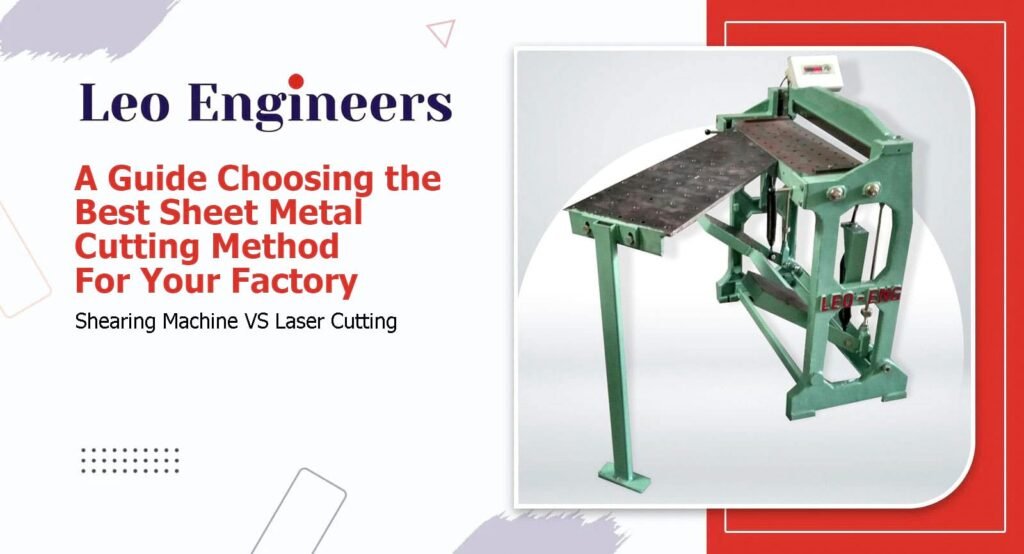
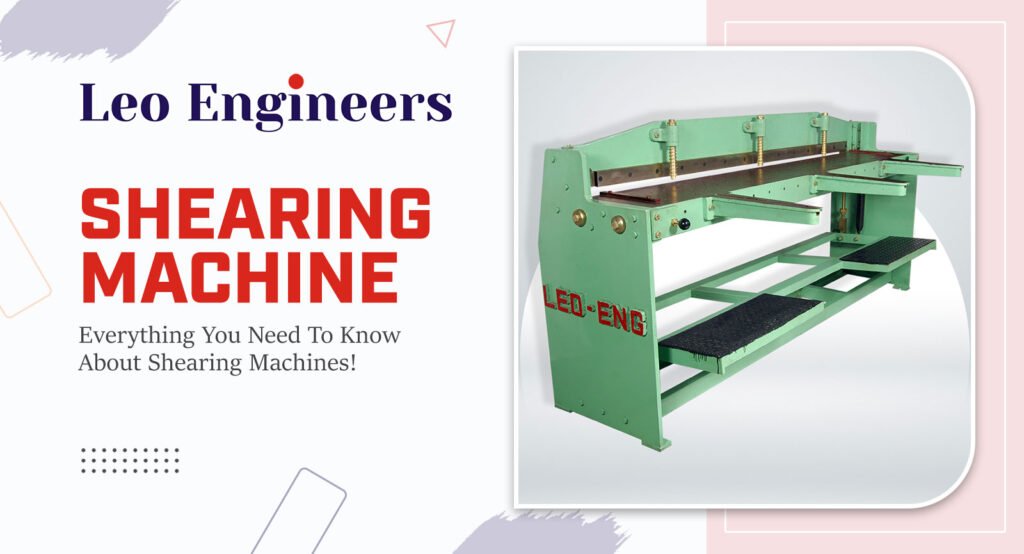
A shearing machine is designed to cut sheet metal using a straight blade with high force. It is one of the most cost-effective and fastest methods for straight-line cutting.
Unlike thermal cutting methods, shearing:
- Produces no heat-affected zone
- Consumes less power
- Delivers high-speed repetitive cutting
- Requires lower capital investment
For high-volume straight cuts, this method remains the backbone of fabrication shops.
Understanding Laser Cutting
Laser cutting uses a high-powered focused laser beam to melt or vaporize metal along a programmed path.
It is ideal for:
✅Intricate shapes✅Complex geometries
✅Fine detailing
✅Low-volume customized fabrication
However, it involves:
✅High capital cost✅Skilled programming
✅Expensive maintenance
✅Higher power consumption
Direct Comparison: Shearing Machine vs Laser Cutting
1️⃣ Initial Investment Cost
| Factor | Shearing Machine | Laser Cutting |
|---|---|---|
| Capital Cost | Moderate | Very High |
| Installation | Simple | Complex |
| Power Setup | Standard Industrial | Heavy Electrical Setup |
For Indian SMEs and mid-scale factories, laser cutting systems may require 3–5x higher investment compared to a quality shearing machine.
If your production involves repetitive straight cuts, the additional cost may not justify the return.
2️⃣ Production Speed
Shearing machines are extremely fast for linear cutting.
Laser cutting slows down when:
✅Cutting thicker sheets✅Producing long straight cuts
✅Running bulk production
For high-volume fabrication, a pneumatic shearing machine can outperform laser systems in output per hour.
3️⃣ Cutting Precision & Edge Quality
Laser cutting provides:
✅Smooth edges✅Complex contours
✅Minimal finishing required
Shearing provides:
✅Clean straight cuts✅Slight burr formation (manageable with correct blade selection)
✅Excellent dimensional consistency
For industries like transformer manufacturing or panel fabrication, straight-line accuracy is often more important than intricate patterns.
4️⃣ Operating & Maintenance Cost
Laser cutting requires:
✅Optics maintenance✅Gas supply
✅High-end spare parts
✅Skilled technicians
Shearing machines require:
✅Blade sharpening or replacement✅Basic lubrication
✅Mechanical maintenance
Maintenance cost difference over 5 years can be significant, especially for factories operating 2–3 shifts.
5️⃣ Return on Investment (ROI)
This is where the decision becomes strategic.
If your factory:
✅Cuts standard sheet sizes✅Requires repetitive straight cutting
✅Works in bulk production
✅Operates in cost-sensitive markets
A shearing machine delivers faster ROI.
✅Laser systems make financial sense only when:
✅You produce high-value custom fabrication✅Intricate designs are mandatory
✅Premium clients demand precision detailing
When Should You Choose a Shearing Machine?
Choose a shearing machine if:
✅ You manufacture panels, enclosures, transformer cores
✅ You require straight cuts in CRGO sheets
✅ You want lower investment risk
✅ You prioritize production speed
✅ You want easy maintenance
For CRGO applications, pairing a shearing setup with a CRGO Core Cutting Machine improves productivity dramatically.
Role of Foot Pedal and Treadle Shearing Machines
For small workshops and light fabrication:
- Foot Pedal Shearing Machine is ideal for low-volume cutting
- Treadle Shearing Machine works well in small-scale industries
They are:
- Energy-efficient
- Compact
- Budget-friendly
What Most Procurement Engineers Overlook
Many factories compare machines only on:
- Cutting precision
- Brand name
- Automation level
But the real decision should include:
- Total lifecycle cost
- Downtime risk
- Spare availability
- Local service support
- Production scalability
In India, service accessibility plays a major role. Imported laser systems often lead to long downtime during spare replacement.
A locally manufactured industrial shearing machine ensures faster service response and reduced production loss.
Final Decision Framework for Indian Factories
Ask these 5 questions before investing:
- What percentage of my cuts are straight vs complex?
- What is my monthly sheet cutting volume?
- Can my current infrastructure support high-power laser systems?
- What is my acceptable ROI timeline?
- Do I need speed or intricate detailing?
If most answers favor speed, cost-efficiency, and bulk production — a shearing machine is the smarter industrial investment.
Conclusion: Practical Investment Beats Over-Engineering
Laser cutting is impressive technology. But impressive doesn’t always mean profitable.
For Indian manufacturing conditions where cost control, bulk production, and durability matter — a high-quality shearing machine often delivers better long-term value.
The right decision depends on your application.
If you’re evaluating sheet metal cutting equipment for your factory, consult with a manufacturer who understands Indian production realities — not just machine specifications.





 Users Today : 11
 Users This Month : 196
 Total Users : 197
